Safety Uniforms

Outdoor workers face a major challenge every summer. Heat. Whether employees work in utilities, transportation, construction, or public services, high temperatures can make the workday uncomfortable and even unsafe. The right uniform can make a big difference. Cooling uniform options are designed to help workers stay...

For organizations operating in utilities, energy, manufacturing, and industrial environments, worker safety programs must address a wide range of potential hazards. One important protective measure is flame resistant clothing, often referred to as FR clothing. Many employers ask the same question when reviewing safety requirements: How...

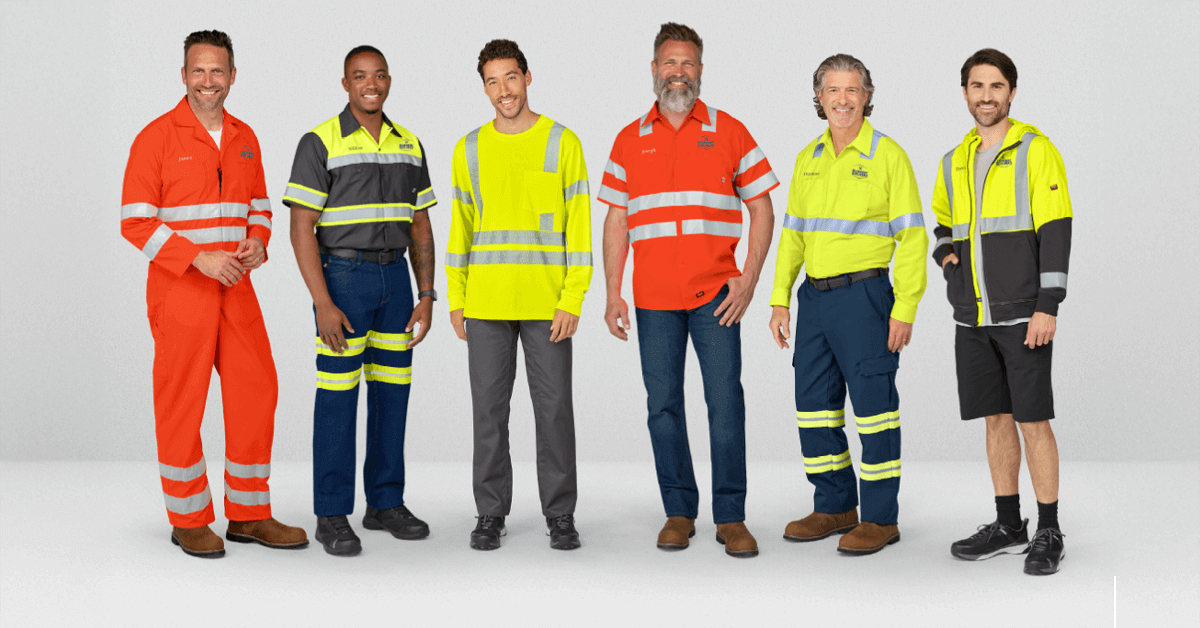
For organizations managing field crews in utilities, public works, and transportation, high-visibility apparel is not optional. It is a core safety requirement that helps protect employees working near moving vehicles, heavy equipment, and active roadways. Understanding ANSI High Visibility Classes ANSI standards categorize high visibility garments based...

FR, hi-vis, and arc-rated clothing serve different purposes and meet different safety standards. Choosing the wrong category can leave workers unprotected or waste budget on gear they do not need. This guide breaks down what each type does, when it is required, and how to match the right protection...

Managing uniforms across a multi-shift manufacturing facility is one of the hardest logistics challenges in workforce management. Between safety compliance, high turnover, and three shifts running around the clock, the margin for error is razor thin. A managed manufacturing uniform program takes that complexity off your plate so your...

Understanding the Challenge of Complex Uniform Distribution For operations leaders and procurement officers managing uniform programs across regulated industries, provisioning employees is rarely straightforward. It requires more than ordering garments. It involves overseeing entitlement matrices, meeting safety requirements, and distributing precisely selected uniform components to multi-site...

For procurement and safety leaders in high-hazard sectors such as utilities, manufacturing, and transportation, selecting the right flame resistant apparel (FR apparel) is more than just a compliance task. It's a decision that directly impacts worker safety and operational integrity. Choosing protective gear involves more than...

For procurement leaders in transportation, utilities, facility maintenance, and water and wastewater operations, uniform sourcing often focuses on visibility and durability. However, in environments with variable weather, such as heavy rain, freezing fog, or constant exposure to water, the ability of your apparel to manage...

Protecting your outdoor workers during cooler temperatures requires more than just adding a reflective vest over a winter coat. This guide explains why standard Hi-Vis gear often falls short in cold weather and how to help ensure your winter uniforms meet the ANSI/ISEA 107 standard. We'll...

Keeping outdoor workers safe in winter requires more than insulated jackets. To truly prevent dangerous conditions such as hypothermia, frostbite, and trench foot, procurement leaders must take a systems-based approach to protective gear. This guide breaks down OSHA guidance on cold stress prevention, focusing on...